
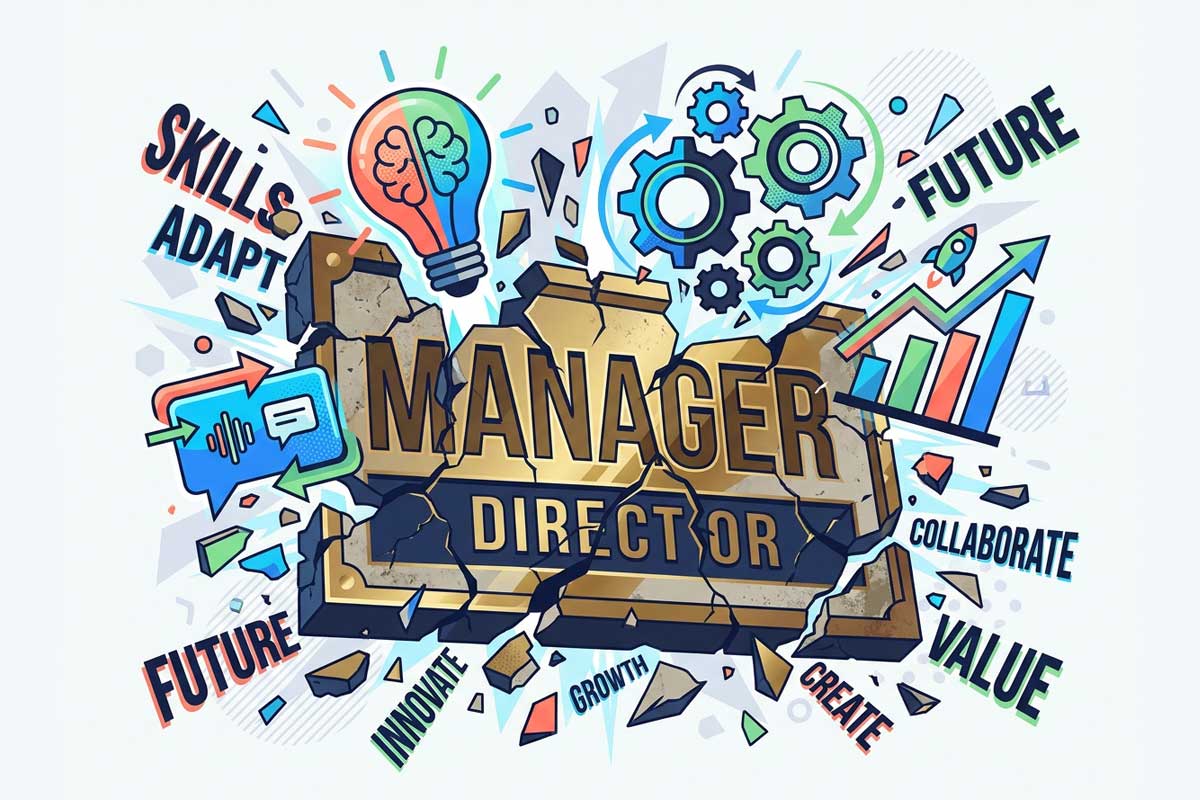
You’ve probably met someone whose business card reads “Chief Happiness Officer.” Or scrolled past a LinkedIn profile listing “Growth Ninja” or “Brand Evangelist.” At first glance, it looks like corporate creativity run wild. Look closer, and something more significant is happening beneath the surface.
Job titles — those neat, hierarchical labels that have organized workplaces for over a century — are losing their grip. Not all at once, and not without resistance. But the ground is shifting, and the organizations that recognize this shift early will have a decisive advantage in attracting, developing, and retaining the talent that actually moves the needle.
How We Got Here: The Rise and Reign of the Title
The modern job title is a legacy of industrial-era management thinking. Factories needed clear chains of command. Bureaucracies needed accountability structures. Titles became shorthand for authority, scope, and compensation — a way to know, at a glance, where someone sat in the pecking order and what they were allowed to decide.
That logic made sense when work was stable, roles were narrow, and organizations changed slowly. For most of the twentieth century, a career was a ladder: you climbed from Analyst to Manager to Director to VP, each rung clearly defined, each step a reward for tenure and performance.
That world is fading.
The Forces Pulling Titles Apart
Several converging forces are eroding the relevance of traditional job titles — not as a trend, but as a structural shift in how work gets done.
- Flat and fluid hierarchies. A growing number of organizations — from technology startups to large professional services firms — have deliberately reduced management layers. In flatter structures, the distance between a front-line contributor and a senior decision-maker might be one conversation, not five approval levels. Titles that signal hierarchy lose their meaning when hierarchy itself is shrinking.
- Project-based and cross-functional work. When a product launch requires a marketer, an engineer, a legal analyst, and a customer success lead working as a single unit for three months, what does anyone’s title actually tell you about their contribution? In project-based work, what matters is what someone *does* in this context — not what they’re *called* in the org chart.
- The gig economy and portfolio careers. Millions of professionals now work across multiple organizations simultaneously, shifting between roles depending on what a given project demands. A person might be a strategist for one client, a workshop facilitator for another, and an advisor for a third — all in the same month. A single job title cannot contain that reality.
- Gen Z expectations. The generation now entering the workforce in significant numbers grew up in an era of skills-based online learning, creator economies, and transparent compensation data. They are notably less impressed by titles and more interested in ownership, contribution, and growth. Research consistently shows that younger workers prioritize learning opportunities and meaningful work over the prestige of a senior-sounding label.
- Remote and global teams. When a team operates across time zones and cultures, the social signals embedded in titles — the status cues that matter in a shared physical office — simply don’t travel well. What travels is demonstrated competence and the trust it builds.
What This Means for Employees
For individuals, the slow death of the title cuts both ways.
On one hand, it is liberating. A world organized around skills and contributions rewards people for what they can actually do — not for how long they’ve sat in a chair or how well they’ve navigated internal politics. Someone two years into their career who has developed rare expertise in a critical area can command genuine influence and recognition, regardless of what their business card says.
On the other hand, it demands something most people weren’t trained for: the ability to articulate and demonstrate their value continuously, without the shorthand of a prestigious title to do that work for them. When the ladder disappears, individuals need to build their own map. That requires self-awareness, a clear understanding of one’s own skills, and the confidence to advocate for them.
The professionals who will thrive in this environment are the ones who invest relentlessly in their own development — who treat learning as ongoing practice rather than a box checked at the end of a degree or a training course.
What This Means for Leaders
Leaders face a different challenge. When titles carry less weight, authority must come from somewhere else — and that somewhere is credibility, demonstrated through expertise, consistency, and genuine investment in the people around them.
The command-and-control manager, whose authority rested largely on their position in the hierarchy, is increasingly out of place in modern organizations. What’s needed instead is the leader who can articulate direction clearly, earn trust through transparency, and create conditions where people with different skills can collaborate effectively without constant direction.
This also means that the leaders who succeed will be learners themselves. The half-life of any specific technical or business skill is shrinking. A leader who stopped developing their own capabilities five years ago is already operating on outdated maps. The willingness to be curious, to be wrong, to learn publicly — these are increasingly competitive leadership traits, not just admirable personal qualities.
What This Means for HR and L&D Professionals
For HR and Learning & Development professionals, the shift away from titles creates both urgency and opportunity.
If job titles no longer reliably signal what someone can do, organizations need better tools for understanding, developing, and deploying their people. Skills inventories, competency frameworks, and continuous learning ecosystems are no longer nice-to-have infrastructure — they are the new organizational backbone.
The practical implications are significant:
- Hiring needs to become skills-based. Rather than filtering candidates by title history, organizations benefit from evaluating demonstrated capabilities. This also opens talent pools that would otherwise be overlooked.
- Career pathways need to become more visible and flexible. When the ladder is gone, people need a lattice — multiple routes forward that reflect different strengths and different definitions of growth. Without this, talented people leave not because they’ve hit a ceiling but because they can’t see a floor.
- Learning must be embedded in work, not separated from it. The annual training day model is insufficient for the pace of change most organizations face. Development needs to happen continuously, in context, in ways that connect directly to the work people are actually doing.
- Recognition systems need updating. If contribution matters more than title, the ways organizations recognize and reward people need to reflect that. Compensation, visibility, and advancement should track to demonstrated impact — not to how long someone has held a particular role.
Practical Steps for Organizations Navigating This Shift
Making the move from a title-centric to a skills-centric organization is not a policy decision — it’s a cultural transformation, and it takes time. But there are concrete places to start.
- Map what you actually need. Before you can build a skills-based organization, you need clarity on which skills drive the outcomes that matter most. This is work worth doing carefully, with input from the people closest to the work.
- Have honest conversations about growth. Many employees are deeply attached to the idea of title progression — it’s how they’ve been conditioned to measure their own success. Leaders and managers need to be equipped to have genuine conversations about growth that go beyond “what’s my next promotion.”
- Invest in manager capability. The managers who can coach, give meaningful feedback, and develop their people are the ones who make the skills-based organization work in practice. This is not a natural talent — it’s a learnable skill, and it deserves serious investment.
- Start measuring what matters. Organizations tend to track what’s easy to measure — headcount, tenure, certifications completed. The shift to skills-based work requires building the habit of measuring contribution: what impact did this person have, what problems did they solve, what did they help others accomplish?
What Replaces the Title
So if not the title, what?
Three things are emerging as the new currency of professional value.
- Skills — specific, demonstrable, and increasingly verifiable. Not “leadership” as a personality trait, but the ability to run a negotiation, navigate a conflict, communicate across cultural differences, or solve a particular class of problem.
- Contributions — the actual impact someone has on the work around them. Did this person make the team better? Did they move the project forward? Did they bring something to this challenge that wouldn’t have happened without them?
- Track record — not a list of titles held, but a pattern of problems tackled and outcomes achieved. The portfolio replaces the ladder.
None of these are new ideas. But the conditions that make them necessary — and the tools that make them measurable — are arriving together, and quickly.
A Final Thought
The erosion of traditional job titles is not a loss. It is, at its core, an invitation to be more honest about what work actually is: the application of human skill, judgment, and effort to problems that matter.
Organizations that embrace this shift will build cultures where people grow, contribute, and stay — not because of the status their title confers, but because of the genuine investment made in their development. The organizations that resist it will find themselves clinging to structures that serve bureaucracy more than they serve their people or their performance.
The title is fading. What replaces it — skills, contribution, continuous growth — is far more interesting.
Building a workforce ready for this new reality starts with investing in the right capabilities at the right time. Organizations that treat learning and development as a strategic priority — not a periodic checkbox — are the ones building the kind of teams that will lead in the years ahead.

